
EXPERIMENTAL RESEARCH · UTRECHT UNIVERSITY
Hydrogen Lab.
Experiments and models for hydrogen conversion, dynamic operation and durability at GeoLab.
Research focus.
Solid-oxide systems
Stack performance, load cycling and reversible fuel-cell/electrolysis operation.
AEM electrolysis
Anion-exchange membrane systems under variable power, including production, standby and storage integration.
Models and diagnostics
Coupled electrical, thermal and gas dynamics; performance changes across operating histories.
Impedance diagnostics and predictive models are in development. Current SOEC/co-electrolysis models use literature data; validation for the Utrecht setup remains to be established.
FROM CELLS TO STACKS
Solid-oxide stacks.
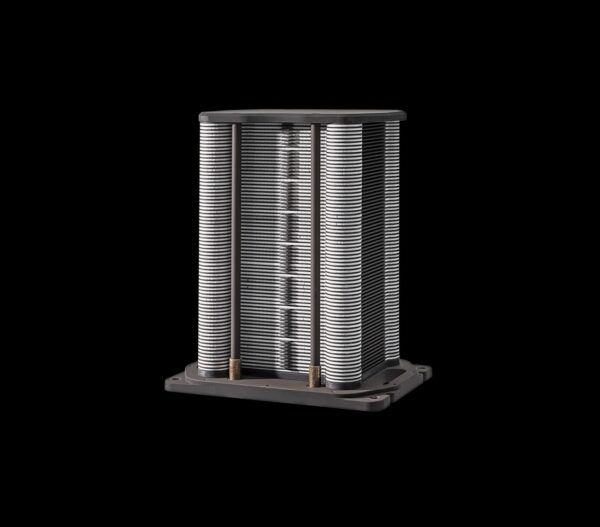
Interconnects join ceramic cells into a stack. Our research examines how load, temperature and gas supply influence performance and durability.
Solid-oxide cells convert steam to hydrogen in electrolysis mode, or hydrogen to electricity in fuel-cell mode.
Test platform.
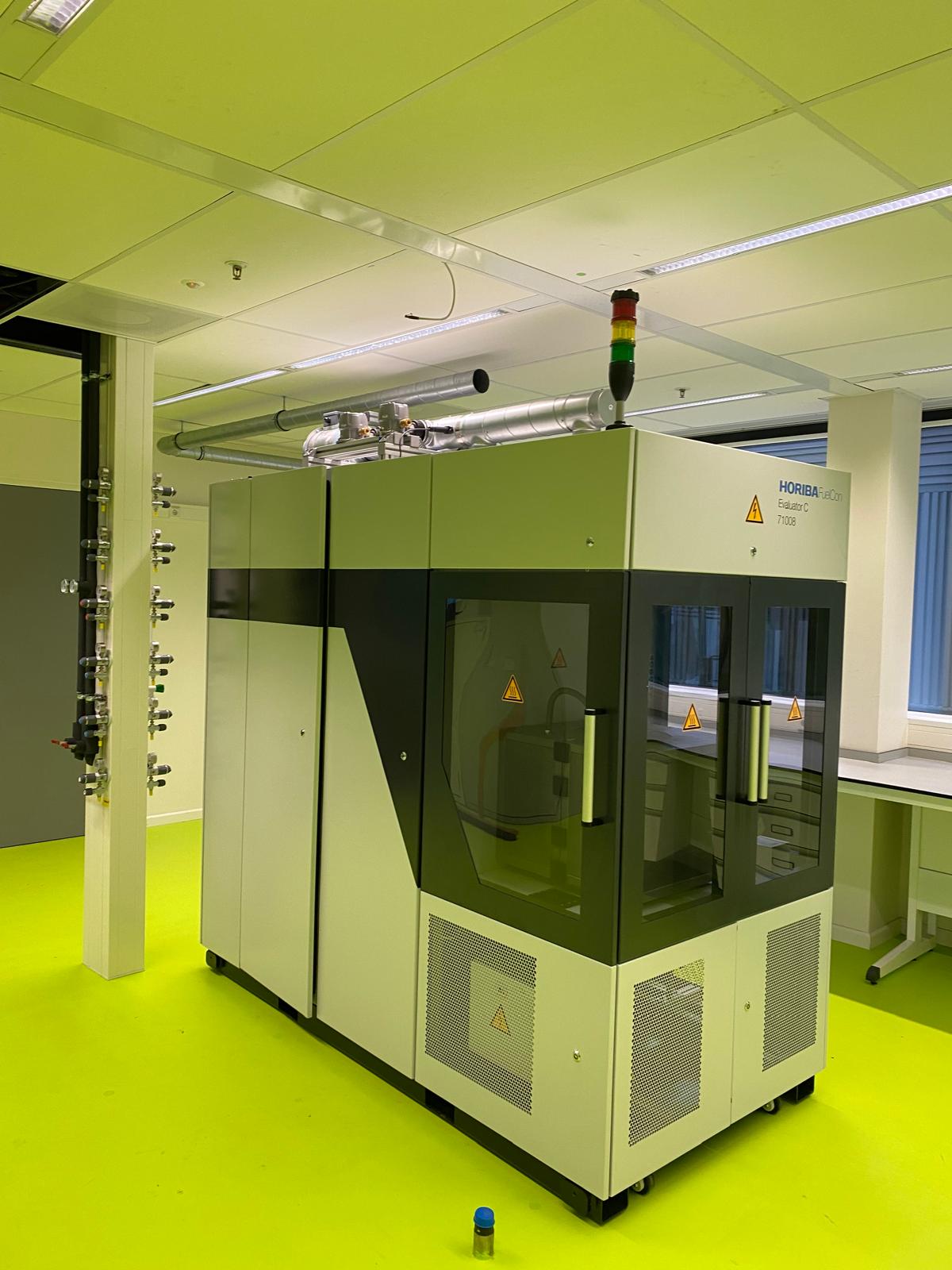
HORIBA FuelCon Evaluator C1000-HT for controlled solid-oxide stack experiments.
Technical specifications
−6.0 to +3.6 kW
Continuous electrical power range
−400 to +360 A
Current control range
1.1–2.0 bar(a)
Pressure control · absolute
900 °C
Maximum continuous furnace temperature
Equipment ratings for the delivered test-station configuration, not measured stack performance. Electrical specifications apply at the cable/sense terminals, without the test item, at 20 °C ambient. Pressure control is specified with open fuel and air supply lines. The documented electrical signs are retained; the maximum ratings are not necessarily available simultaneously.
Visit the lab.
GeoLab · Vening Meineszgebouw B
Princetonlaan 8, 3584 CB Utrecht